About Us

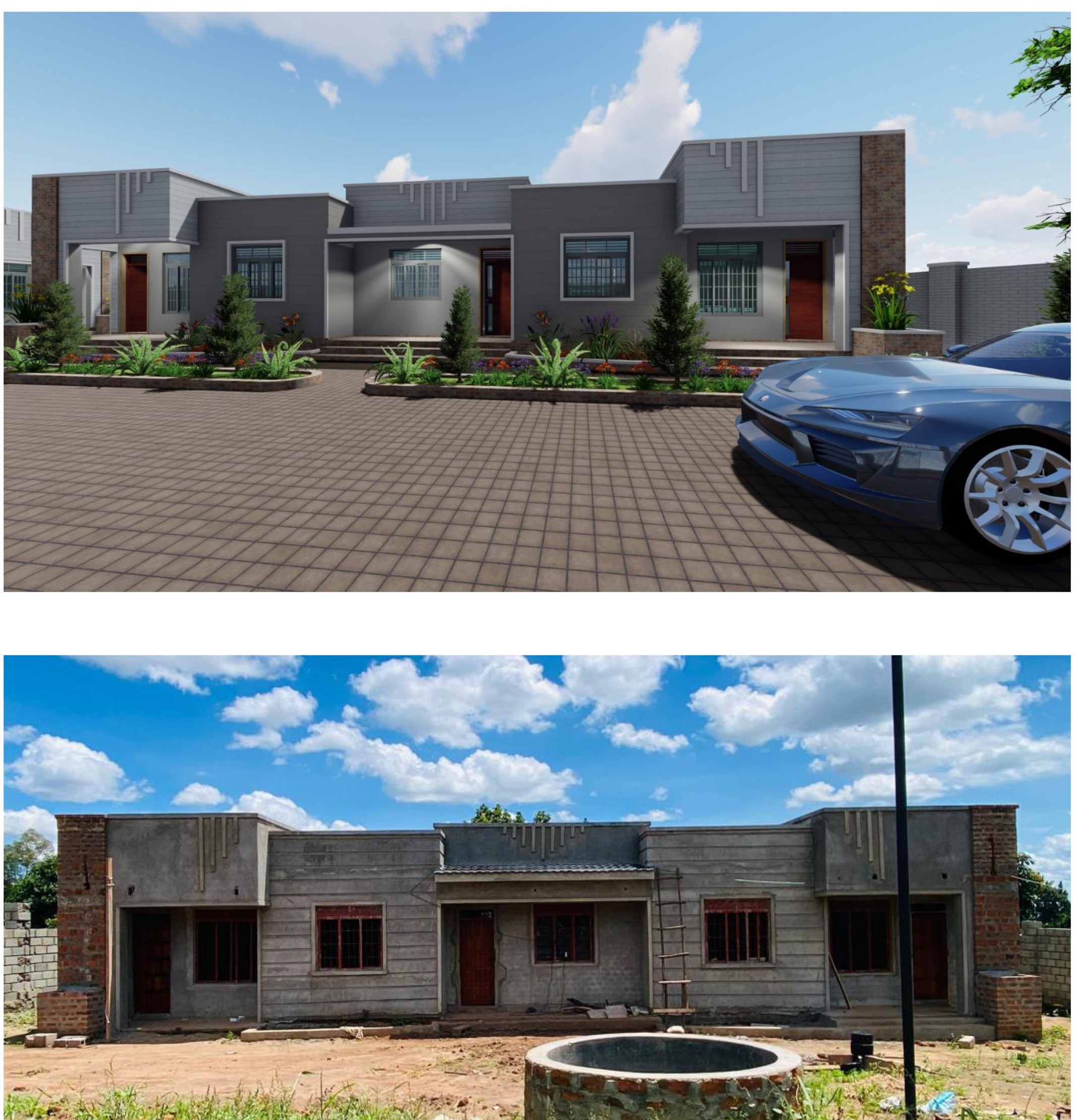
L‑Stone Tech Limited is a Ugandan‑registered professional firm established in May 2018 and headquartered in Gulu City, Northern Uganda. We provide integrated architectural, engineering, consultancy, and project management services, delivering practical and high‑quality solutions for the built environment.Since our establishment, we have successfully undertaken diverse projects in architectural design, structural engineering, consultancy, and construction project management across various r...

Read More

Our Services

Inquire

Architectural Designs

Our team develops comprehensive drawings and plans, including floor layouts, elevations, and 3D visualizations, giving you a clear picture of the final outcome before construction begins. We work closely with engineers and construction teams to ensure that every design is feasible, safe, and aligned with building regulations.

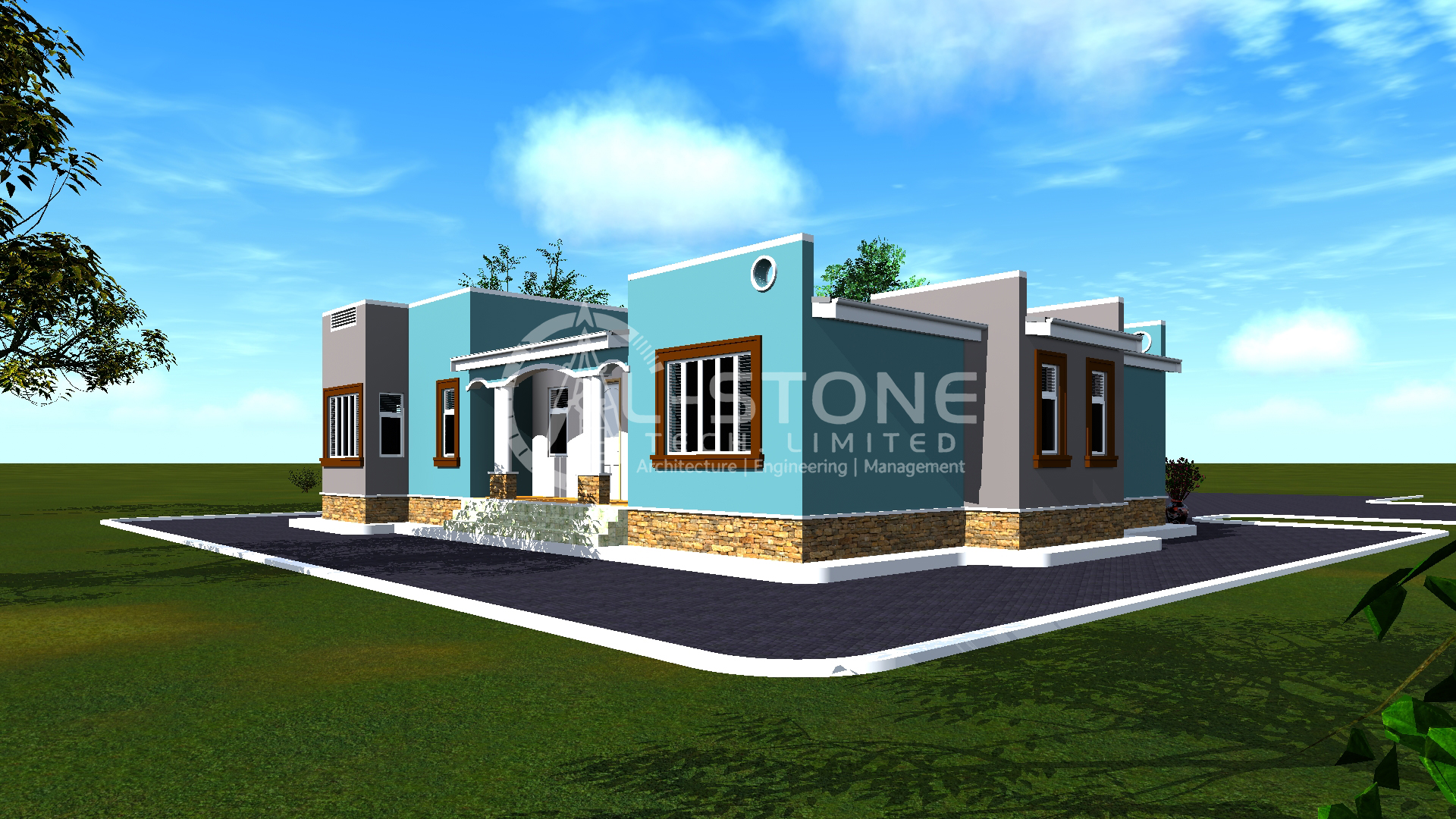
Flashy Residence Design - 3 Bedrooms

a { text-decoration: none; color: #464feb; } tr th, tr td { border: 1px solid #e6e6e6; } tr th { background-color: #f5f5f5; } The Flashy Bungalow is a contemporary interpretation of a modern flat-roof residence, designed to deliver striking visual appeal while maintaining simplicity and functionality. The concept emphasizes clean lines, elegant proportions, and a refined architectural presence that stands out within its surroundings. The layout comprises a well-appointed master suite complemented by two additional bedrooms, creating a comfortable and practical living arrangement. The design also integrates a functional kitchen and dining area, alongside thoughtfully arranged supporting spaces that contribute to a cohesive and welcoming living environment. Carefully considered spatial planning enhances both aesthetics and usability, resulting in an atmosphere that feels open, bright, and effortlessly stylish. The design balances visual impact with everyday comfort, making it suitable for a variety of residential applications. This versatile bungalow is ideal as a family home, a holiday retreat, or a compact countryside residence. It reflects a simple yet sophisticated lifestyle where modern design meets comfort, elegance, and practicality.

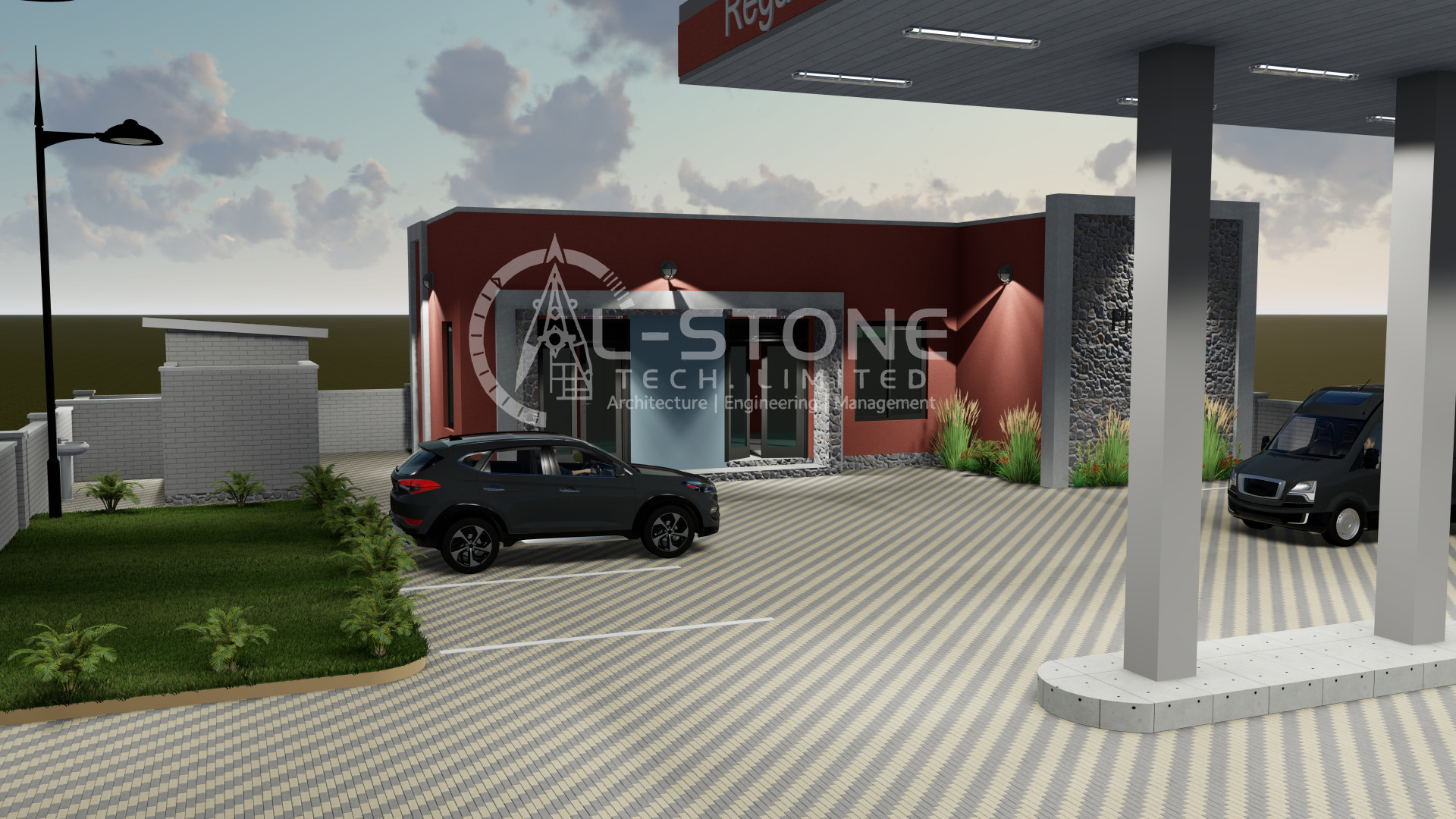
Regal Energy Gas Station at Koro Abili, Omoro District, Along Gulu-Kampala Highway

a { text-decoration: none; color: #464feb; } tr th, tr td { border: 1px solid #e6e6e6; } tr th { background-color: #f5f5f5; } The Regal Energy Gas Station is strategically designed to serve as a reliable and convenient fuelling destination for motorists traveling along the Gulu–Kampala Highway, while also meeting the everyday needs of the surrounding community. In addition to its core fuelling function, the station incorporates a retail shop that offers light refreshments, including cold beverages and coffee providing travelers with a comfortable stopover experience during their journeys. To further enhance its community value, a dedicated space for a pharmacy is integrated into the design, supporting access to essential health services. Despite the constraints of a compact site, the project demonstrates a high level of design efficiency and creativity. Every element has been carefully planned to meet operational standards while maximizing functionality within the limited space, resulting in a well-coordinated and effective layout. The overall site planning ensures smooth circulation for vehicles and pedestrians, complemented by adequate parking areas for short-term stops. Essential amenities such as WASH facilities are thoughtfully incorporated, alongside designated seating areas that offer brief moments of rest and comfort for users. The outcome is a compact yet highly functional facility that balances convenience, service diversity, and spatial efficiency delivering a practical and user-centered solution for both transit users and the local community.

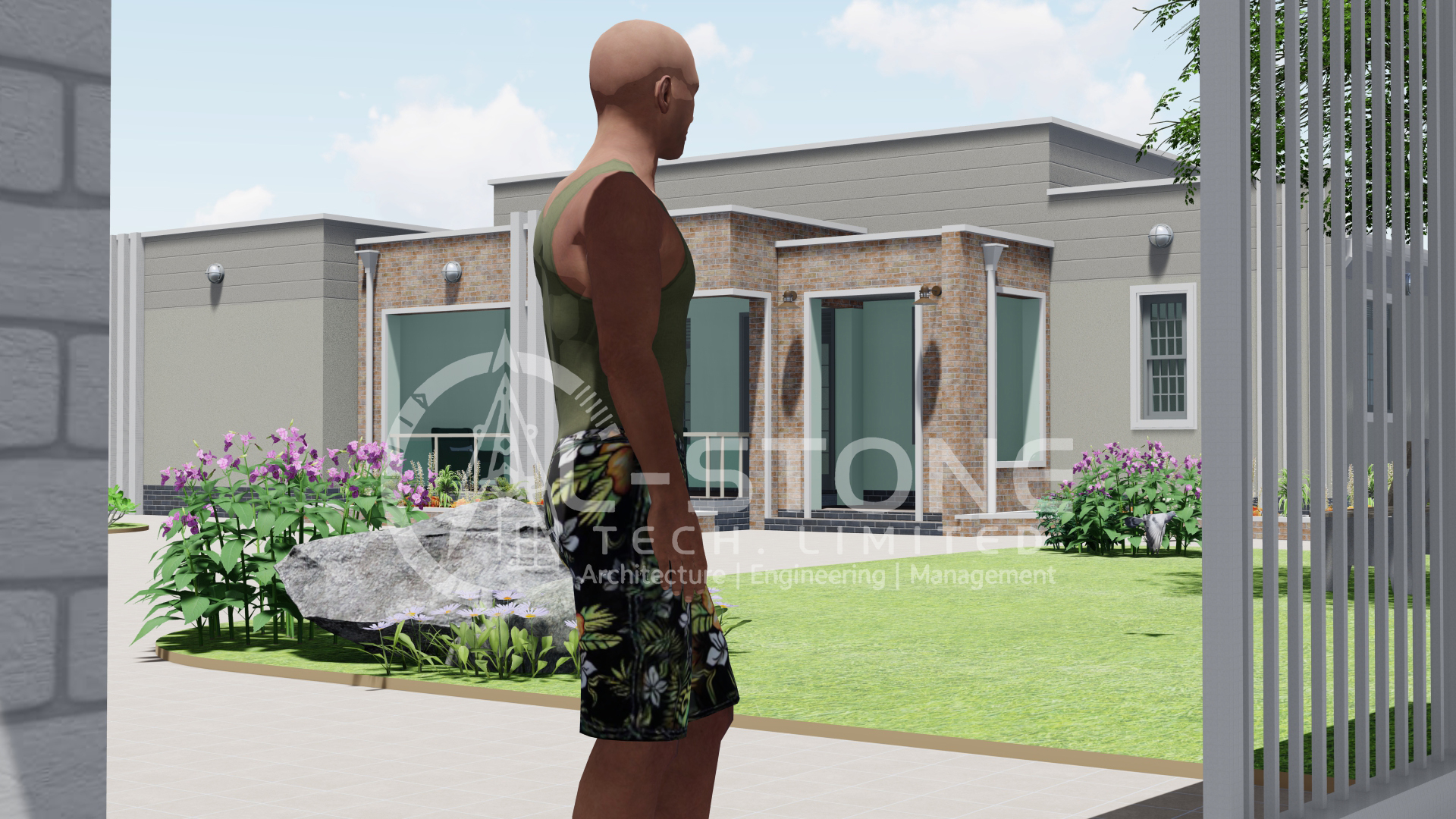
Dr's Residence at Pabaya, Gulu East - Gulu City

a { text-decoration: none; color: #464feb; } tr th, tr td { border: 1px solid #e6e6e6; } tr th { background-color: #f5f5f5; } This three-bedroom bungalow is thoughtfully designed to offer more than just shelter—it creates a warm and inviting family home centered on comfort, privacy, and everyday living. The design features a spacious living room that seamlessly extends into a welcoming front veranda, providing an ideal setting for relaxation and family interaction while enjoying views of the lush green surroundings. This connection between indoor and outdoor spaces enhances the overall living experience, bringing in natural light and fresh air. The living area flows naturally into a well-proportioned dining space, carefully positioned to support both family gatherings and daily meals. Large windows allow for ample daylight and natural ventilation, creating a bright and refreshing atmosphere throughout the central living zones. The bedroom layout has been carefully planned to ensure privacy and tranquility, minimizing disturbance from the more active areas such as the kitchen and living room. Each room offers a peaceful retreat, supporting rest and comfort for every member of the household. Beyond the building itself, the design extends to the surrounding compound, incorporating well-considered outdoor spaces and essential services to create a cohesive and functional residential environment. The result is a complete home that harmonizes architecture, lifestyle, and landscape.

Discover More

Articles

Stay informed with the latest insights, ideas, and updates from Lstone. Our Articles section brings you a curated selection of content designed to keep you connected to what’s happening in the world of construction, architecture, and modern building practices. Whether you’re planning a new project, exploring design inspiration, or simply interested in industry trends, there’s always something valuable to discover.

BRICKS VS. BLOCKS: MAKING THE RIGHT CHOICE FOR YOUR WALL CONSTRUCTION

Let me do this a gain because someone asked again. If you’ve been wondering whether to use burnt clay bricks or cement sand blocks for your residential project, you’re not alone. I am not giving you a sided answer today but i will give you the insight from my practical experience. Both materials are widely used in wall construction, and each comes with its own set of advantages. To help you make an informed decision, let’s break down the key factors to consider: 1. Cost Considerations Cement sand blocks generally come at a higher purchase price compared to locally made burnt clay bricks. This can slightly increase your overall construction budget. However, blocks offer a cost-saving advantage during plastering. Thanks to their smoother surfaces, they require less mortar, which means reduced cement and sand usage. 2. Strength and Structural Integrity Blocks typically offer higher compressive strength than bricks, especially when manufactured to specific engineering standards. Their strength can be tailored to meet structural demands. Bricks, on the other hand, are made from natural soil and fired in kilns, which limits their strength range. While still reliable, they may not match the engineered strength of blocks. 3. Durability and Environmental Resistance Both materials are durable, but blocks can be vulnerable to sulfate attacks—chemical reactions caused by salts in the soil that lead to surface deterioration and loss of strength over time. For this reason, it’s advisable to use burnt clay bricks for plinth walls (foundations), where soil contact is high, and reserve blocks for the superstructure. There are mitigation strategies available, but this approach offers a practical balance. 4. Design Flexibility When your project includes curved walls, arches, or other intricate designs, bricks offer greater flexibility due to their smaller size and ease of handling. They allow for more detailed craftsmanship in areas where precision is key. 5. Overall Performance Cement sand blocks enable faster construction, cleaner finishes, and stronger walls—ideal for projects where time and structural performance are priorities. Bricks, meanwhile, are more affordable, locally available, and adaptable to various design needs. Final Thoughts Choosing between bricks and blocks isn’t about which is better overall, it’s about what’s best for your specific project. Consider your budget, design, structural needs, and environmental conditions. With this knowledge, you’re better equipped to make a choice that balances cost, durability, and aesthetics. Alegi gum maber!

INVOLVING DINERS WHILE ADDING THE FINAL SPICES IN THE SOUP: Why Clients Should Be Part of the Final Stage in Construction Projects

What’s the spirit behind involving clients at the final stage of a project? In construction, just like in cooking, the final touches matter. You wouldn’t serve a soup without tasting it or better yet, letting the diners suggest the final spices.Many clients, especially those without technical backgrounds, find it hard to visualize a building from drawings or early site visits. But when the structure is nearly complete with walls up, finishes in place, everything starts to make sense. This is when they truly see what they’re getting, and that clarity can be transformative.Waiting until handover to hear a client’s concerns can be risky. By involving them earlier, you open the door for timely feedback. Small adjustments can be made before final finishes are locked in, saving time, avoiding rework, and preventing delays that could have been easily avoided.When clients are part of the final steps, they feel a sense of ownership. They’re not just receiving a building; they’re part of its completion. This emotional connection leads to smoother handovers, better long-term care of the facility, and a stronger sense of pride in the outcome.Let’s face it! construction jargon and technical drawings aren’t always client-friendly. But walking through a nearly finished space makes everything click. Clients can better understand how the design meets their needs and suggest tweaks that improve usability and comfort.This final-stage involvement also strengthens relationships. It shows respect and says, “Your opinion matters, even at the end.” That kind of engagement builds trust and sets the stage for future collaborations.Just like adding the final spices to a soup with the diners watching, involving clients at the final stage of construction is a recipe for success. It’s about clarity, collaboration, and care. It ensures the project is not just complete, but truly ready to serve.Let’s build with people, not just for them.

Discover More

News

We highlight key developments across our residential, commercial, and industrial projects, giving you a closer look at how each stage comes together. Whether it’s a groundbreaking ceremony, a project nearing completion, or the launch of a new development, our news updates provide insight into the work we are delivering on the ground.

‘Crawl to the finish’: Last 20% of a project really does take longer

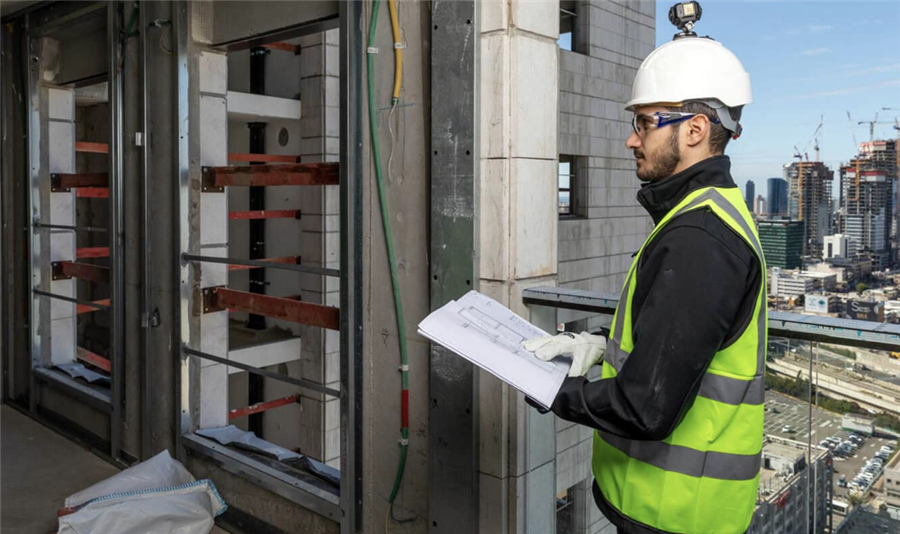
The last 20% of a construction project really does take longer.That’s according to construction technology company Buildots, which tracks construction progress with 360-degree cameras, drones, and AI. It has analysed 40 types of activity across 102 global projects in residential, office, education, industrial, healthcare and commercial.Its analysis found that the median construction activity spend 27% of its duration on the final 20% of its scope.In 44% of cases, it took 30% of more of the total duration, while in 24% of cases it took 40% more and in 12% of cases it took 50% more.Buildots also found that certain activities consistently have “long tails” where they take longer to complete than expected.Others took the least time to complete the last 20% of work:Attempting to explain the phenomenon, Amir Berman, vice president industry transformation at Buildots, said, “The pattern is consistent enough to suggest something structural. While we don’t have all the answers, we noticed that the longest-tail activities tend to be trades that depend on access to many locations across a project. For example, sprinkler branches need to reach every zone and floor. Floor tiling covers every room. Ceiling framing spans every corridor. Once the main push is done, finishing these activities requires working through small, scattered, hard-to-access pockets of remaining scope. Those pockets are slow.“By contrast, the shortest-tail activities tend to be either discrete installations, such as doors, fire alarm devices, light fixtures, or finishing passes over already-prepared surfaces, like mist coat, tape and joint, and drywall closure. Once the preparation work is done, these trades can move fast because their remaining scope isn’t geographically scattered in the same way.”Buildots said its findings showed that activity duration isn’t a “one-size-fits-all” curve, with some activities that progress in a linear fashion, while some front-load and others tail off for weeks.It said that expectations for project duration would become more achievable, the closer planning gets to “activity-specific realism”.

Why bigger is not always better in construction equipment

In mature industries, scale is expected to deliver better margins, faster growth and greater stability. Yet, as fresh analysis from abcg consultant Alan Berger suggests, when it comes to construction equipment, those assumptions do not hold – raising doubts about whether a major consolidation wave is really on the horizon.On paper, the construction equipment sector should be consolidating. It is a mature-but-growing industry, shaped by the sort of commercial and technological pressures that typically reward scale and gradually narrow the field. Yet the reality is more complicated. For all the headline deals, strategic repositioning and product evolution of the past 15 years, the industry remains fragmented – almost three times more so than agricultural equipment.Plus ça changeThere has been no shortage of visible change: Chinese OEMs have entered the top ranks of KHL’s Yellow Table, alternative powertrains have advanced and connected products have become a baseline expectation. But beneath that movement, the underlying structure has been unusually stable. The combined share of the top 10 OEMs has sat at just over 60% for more than a decade. It is this contrast between visible momentum and structural resilience that gives renewed relevance to the latest questions surrounding possible separate sales of Wacker Neuson and Genie. Is this a sign that the industry is entering a new phase of consolidation, or simply a remake of an old story?Source: abcgTo move the discussion beyond speculation, abcg initiated a study designed to separate long-term trends from short-term chatter. We combined public financial reporting with KHL’s Yellow Table and Off-Highway Research (OHR) data and assessed what we saw with the judgment of abcg™’s senior team of industry experts. The goal was not to predict the next deal, it was to answer a more strategic question: What, if anything, is likely to make consolidation inevitable?The promise of scaleConsolidation in this industry takes two forms: companies buy others (e.g. John Deere buys Wirtgen), or they leave the market (e.g.. Volvo shutting down Rokbak). But M&A is not a strategy by itself. It is a big commitment that comes with integration risk, distraction and a multi‑year payback. Whatever the stated strategic rationale, deals are often framed around set value-creation outcomes. These include structurally higher profitability, faster growth and/or lower volatility across the cycle. We tested these ‘promises of scale’ using the available data.Start with profitability, the most common justification for consolidation in capital‑intensive sectors. The idea is simple: more purchasing power, more leverage in the channel and efficiencies of scale should translate into fatter margins. All good in theory but when we built a 10‑year dataset of operating margins for OEMs with annual revenue of more than $1billion and removed the effects of long‑term industry growth and the business cycle, we found no relationship between company size and operating margin. High margins exist at multiple scales but so do low margins.If scale doesn’t always buy fatter margins, perhaps it does buy momentum. Bigger companies tend to have wider distribution networks and stronger balance sheets. (Advantages that should translate into faster growth.) Yet, using business cycle adjusted measures for both unit volumes and revenue, we again found no meaningful statistical connection between size and growth rate. We also tested the argument that the larger the OEM is the less exposed it is to cycle swings. (Thanks to a bigger installed base and therefore more aftermarket revenue.) Here too, size did not predict more stable margins.What’s really driving performanceThe one relationship that did stand out is that faster growth tends to come with greater volatility. Put differently, growth is often a choice and choices involve tradeoffs. It is often the dynamism of the ‘C-Suite’ that drives growth, profitability, and stability more than a company’s size. That’s encouraging, because it suggests more OEMs can create value through focused execution and portfolio choices not only through the riskier path of major M&A.Of course, there will still be some M&A activity. OEMs pursue acquisitions to close product gaps or add capabilities for clear strategic reasons, and family owners will continue to exit when succession, capital needs or risk appetite changes. And sometimes just because a not-to-be missed bargain presents itself. But what our analysis does not support is the idea of a rapid shift toward a concentrated industry simply because ‘scale wins’. For leaders, that focuses the agenda. The decisive question is less ‘who should we buy?’ and more ‘what would make us perform better regardless of size?” In a sector who’s make up has been largely static, gaining a durable advantage comes – rather boringly it seems – from getting the basics right – mundane as disciplined strategy and operational execution. Construction equipment is therefore likely to remain fragmented for years to come, even as the occasional ‘A Co. buys B Co.!’ headlines continue.Alan Berger is managing partner of off-highway consultancy abcg.

Leeds United secures permission for Elland Road expansion

Leeds United Football Club has secured planning approval for a two-phase redevelopment of Elland Road that will raise the stadium’s capacity to 53,000 and deliver a new West Stand, transport upgrades, and a future overhaul of the North Stand.The hybrid application, approved by Leeds City Council’s chief planning officer under delegated powers, includes full permission for the demolition and rebuild of the John Charles Stand and outline permission for redevelopment of the Don Revie Stand.Work will increase the capacity of the West Stand from 8,000 to 17,750, and that of the North Stand from 10,414 to a maximum of 15,300, making Elland Road the seventh-largest club stadium in the UK and compliant with UEFA Category 4 standards.The redeveloped West Stand will rise to 99.9 metres at its highest point with five floors of accommodation, including concourses, hospitality areas, player and media facilities, and a club museum.The scheme incorporates a new white-brick facade, large ground floor openings, and vertically aligned fenestration to echo the form and rhythm of the proposed North Stand, with a consistent grid structure and brick plinth base.The roof of the West Stand will sit at 84.8 metres, pitched at an angle of 5.179°, and the overall width of the building will be 178 metres.Related questions you can explore with Ask Construction News, our new AI search engine.Who are key firms for Elland Road stadium expansion?What is Elland Road stadium's current seating capacity?What architectural features are planned for Elland Road's new West and North Stands?If you would like to ask your own question you just need to login, register or subscribe.A revised design introduces a vertical emphasis on the south elevation openings, intended to improve architectural cohesion with the East and South stands.Works also include hard and soft landscaping, a 40-space car park, and a new public concourse.Temporary floodlighting and turnstiles will be installed to maintain operations during construction.Related ArticlesHow Farrans is doubling the size of Leeds Bradford Airport - while it remains operational10 projects to watch in 2026Contractor named on Bournemouth FC stadium expansionPlayer and staff facilities will be temporarily relocated, and a hospitality marquee will be delivered under a separate planning application.The scheme requires demolition of the existing West Stand, as well as various ancillary buildings and structures.Below-ground utilities west of the stadium will be renewed and diverted in advance. These enabling works are being delivered under permitted development rights.The temporary loss of car parking and coach facilities during construction will be offset by the repurposing of Fullerton Park.A new away-fan coach park will double as a Multi Use Games Area (MUGA) when not in use, managed by the Leeds United Foundation.

Discover More

Projects

We highlight key developments across our residential, commercial, and industrial projects, giving you a closer look at how each stage comes together. Whether it’s a groundbreaking ceremony, a project nearing completion, or the launch of a new development, our news updates provide insight into the work we are delivering on the ground.

Discover More